


Research Projects
This page focuses on current research initiatives in the Walter Research Group.
If you are more interested in Dr. Walter's classroom innovations OR student success work,
explore using the top navigation bar.
Research Project
Questing for Relevance: Exploring Student Outcomes from Creative Assessment "Quests" in a General Education Biology Course through the lens of the "Hero's Journey"

Students often perceive STEM as boring, lacking relevance, and full of memorizing facts. This in turn influences students to leave STEM degrees or never select them to begin with (Bok, 2006; Seymour & Hewitt, 1997). It is on these premises that we assert that assessments in STEM courses need to reflect creative real-world tasks to engage students’ communities, personal interests, and local contexts (e.g. Montgomery, 2002).
We are using a mixed methods approach to explore what the experience of doing the quest assignments (see here). This includes analyzing more than 1000 reflection prompts from students' quest assignments. The goal is to uncover how and in what ways the quest assignments elicit experiences through the lens of the Hero's Journey, a storytelling framework from literature.
Current Team
Undergraduate Student Researcher: Via Pineda
High School Researcher: Abeeha Saleem
Past Undergraduate Team Members:
Neha Mann (graduated), Bernice Mendoza-Alcaraz (graduated), & Andrea Laine (graduated)
Funding: Three Undergraduate Research Grants from Dean of Undergraduate Studies, Two in AY24-25 for $1200 each); One in AY26-27 for $1500; NSF-HSI Supplement $68,489
Interdisciplinary Research Project
PLANTWISE. Plant Legends And Native Traditions: Wonder Inspiring Science Education

The PLANTWISE Project: Plant Legends And Native Traditions: Wonder Inspiring Science Education focuses on integrating Traditional Ecological Knowledge (TEK) with Western scientific approaches to promote student knowledge and curiosity, ecological resilience, and cultural and linguistic preservation.
The project includes three key components:
-
Building digital storybooks that combine Indigenous stories and Western scientific drawings
-
Using those stories to teach science content to undergraduate students using storytelling AND culturally responsive teaching techniques
-
Studying students’ curiosity, views of science and scientific knowledge (Nature of Science), and knowledge of biology as we examine how the integrated curriculum shapes their understanding of science, culture, and their community
Graduate Researcher: Timothy McKay
Undergraduate Researchers: Elizabeth Melendez, Luis Figueroa Hernandez, & Tess Aaron
High School Researcher: Emilie Leung
Faculty Collaborators: Dr. Katherine Waselkov, Dr. Brian Agbayani, Dr. John Pryor
Funding: Undergraduate Research Award, Dean of Undergraduate Studies, $1500 AY 26-27; Faculty Sponsored Student Research Award, $1000, 2025.
Research Project
STEM Belongs to Everyone!: A Meta-Analysis of Culturally Relevant, Responsive, and Sustaining Pedagogies in Higher Education

The objective of the project is to do a qualitative meta-analysis of the existing literature exploring student outcomes of culturally relevant, responsive, and sustaining pedagogies. We are currently analyzing more than 100 articles to explore and run statistics on their findings. We hope that the analysis we publish will inform the field to do more targeted explorations of the impact of culturally informed STEM teaching in post-secondary settings.
Current Team
Undergraduate Researchers: Vivian Nguyen and Hannah Gill
Past Team Members
Undergraduates: Allison Vang, Danielle Vu, and Alexa Valdez (graduated)
High School Researchers: Aleeza Tariq & Anna Lee (graduated)
Funding: Undergraduate Research Award, Dean of Undergraduate Studies, $1200 AY 25-26
Research Project
A Quantitative Exploration of the Impact of Culturally Responsive Teaching in Upper-Division Microbiology
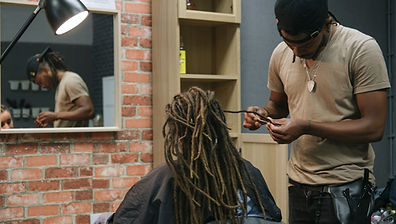
This study investigates how culturally responsive teaching shapes college students’ knowledge and sense of belonging in upper-division microbiology courses. Using Black hair care and the scalp microbiome as culturally meaningful examples, two lessons and a homework “quest” connect core microbiology concepts (such as microbial genetics and adaptation) to real-world examples from students' everyday lives.
We are gathering data using surveys to look for changes from before and after instruction tin students' microbiology knowledge, sense of belonging, self-efficacy, and perceptions of culturally responsive teaching.
The findings aim to provide practical, evidence-based strategies for instructors seeking to create more inclusive and effective college science classrooms.
This project has concluded as of Spring 2026.
]\
Graduate Researcher: Cheyenne Woods (graduated)
Undergraduate Researcher: Andrea Laine (graduated)
High School Researcher: Nicholas Hamilton (graduated)
Research Project
Exploring Students' Ability to Use Lateral Reading to Debunk Misinformation about Vaccines

The objective of the project is to teach students to build skills to evaluate scientific information about vaccines online.
Part of our approach is using the W.I.S.E. method - asking Who made the information, what was their Intent, what are their Sources, and what resources say Elsewhere (that is, through lateral reading).
We are exploring qualitative and quantitative outcomes for students to see how and in what ways their ability to debunk information changes after civic online reasoning instruction.
Current Team Members
Undergraduate Students: Rasleen Kaur & Vivian Nguyen
High School Students: Naye Lee & Aleeza Tariq
Past Graduate-Student Team Members
Arron Ridenour (graduated); Emma Guerrero Jones (graduated)
Research Project
Secret Sauce: Southeast Asian American Culture as a lens for Culturally Responsive Pedagogies in Majors' Biology

In this project, we are exploring student identity and scientific knowledge outcomes in a majors' biology lesson (BIOL 1A) focused on fish sauce and fermentation processes as part of Southeastern Asian Culture. We are excited to explore this project as part of greater efforts to break the "model minority" myth for Asian students in STEM and to better connect with Fresno State's Southeastern Asian community.
This lesson draws on students' knowledge of their families, cultures, and cooking, regardless of their personal background.
Exploring the outcomes of the lesson intervention through research included analyzing a sample of 20 interviews with students from the course AND quantitative survey data analysis from a large sample students in Biology 1A.
Undergraduate Researcher: Hannah Gill
Graduate Student Researcher: Tony Chontong (graduated)
This project has mostly concluded, but we expect a 2026 publication!
Funding
Faculty Sponsored Student Research Awards, $1000 in 2023 (Chontong) and $1000 in 2024 (Gill). Undergraduate Student Research Award from Dean of Undergraduate Studies; $1200 in AY24-25.
Research Project
We Not Plants to “Weed Out”: A Phenomenological Study of the Educational Experiences of First-Year STEM Majors

The objective of the project is to use a phenomenological approach (Moustakas, 1994) to understand the lived experiences of first year students who are science and mathematics majors.
We completed 20 semi-structured focus group interviews with individuals taking the second semester of a first-year experience courses for STEM majors. We are using Social-Cognitive Career Theory (Brown et al., 2019) and Intersectionality (Christensen et al., 2012) to frame our interview questions and to analyze these data.
This project is currently dormant as all students on the project have graduated. With the right team, this project can continue!
Undergraduate Researchers (graduated): Chahat Asi, Rania Alteshi, and Nemah Abdullah